What Meaning to Get Back Into It Actually Costs
There's a cost to meaning to. Nobody puts a number on it, so it feels like nothing — a decision sitting harmlessly on a shelf, available whenever you're ready. So here is the number.
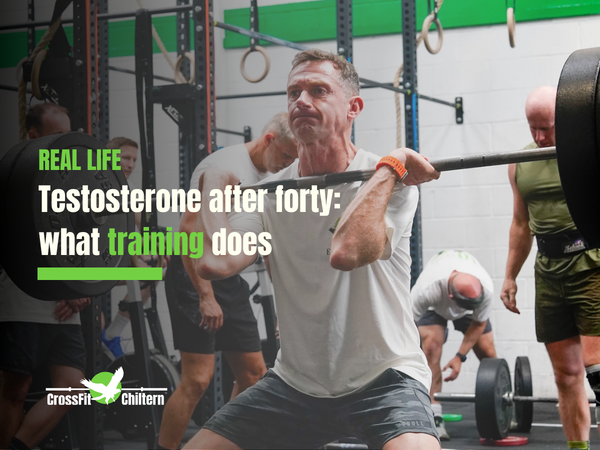
From around thirty-five, an adult who does no resistance training loses somewhere in the region of three to eight per cent of their muscle mass per decade, and the rate accelerates after fifty. Bone density starts declining in your thirties too, and for women it drops sharply around the menopause. Aerobic capacity — the thing that decides whether a flight of stairs is an event — falls by roughly ten per cent a decade in an untrained adult.
So a year of meaning to costs you something. And everyone I've sat across a desk from who finally started has said the same sentence within six months: I wish I'd done this years ago.
Now the better news, and the reason I do this job. None of it is a one-way door. Muscle can be rebuilt at sixty. Bone responds to loading at seventy. Aerobic capacity improves at any age, and improves fastest in the people who have the least of it — which means the person most nervous about walking in is the one who'll improve quickest. That's how adaptation works: the further from the ceiling you are, the faster you move.
I've watched a sixty-two-year-old add thirty kilos to a deadlift in a year. I've watched people who couldn't get off the floor without a hand do it unaided within four months. The body is far more willing to come back than most people believe, and the belief that some door closed at forty-five does more damage than the years off ever did.
So here's the ledger. The cost of starting: two hours a week, some discomfort for a few weeks, and a spell of being a beginner at something you're not good at yet. The cost of continuing to mean to: another year of the slide, and, in twelve months, this same Sunday evening, the same thought, and slightly less to work with.
There isn't a third option where you wait for a calmer year and start from where you are now.
Term begins next week. The routine resets on its own — the one week of the year when the calendar does the hard work for you. You won't get a cleaner run at this until January.
The best time to start was years ago. The second-best time is next week.
If the thought of walking into a gym makes you wince, this is exactly who we built the place for. Book a free, no-obligation 15-minute chat with Jeremy or Beth at crossfitchiltern.com — no hard sell, and most of us hadn't trained in years when we started. We'll build a plan around your life, not a generic template.