Why Your Kids Need to Lift Before They're Teenagers
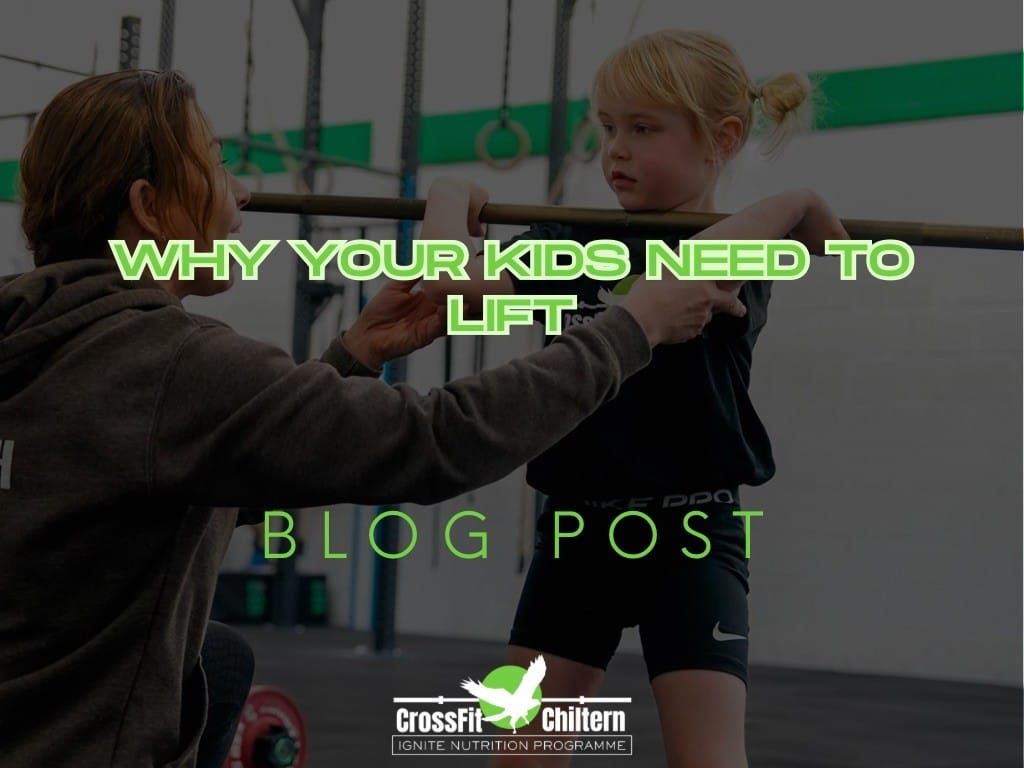
There is a persistent myth that resistance training is dangerous for children — that it stunts growth, damages developing joints, and should be left until they are sixteen at the earliest. It is repeated by well-meaning so called experts, passed between parents on the school run, and treated as settled fact. It is not settled fact. The current body of evidence says the opposite, and understanding why matters if you want your child to arrive at adulthood with a body that works properly.
The science here is unambiguous. The American College of Sports Medicine, the National Strength and Conditioning Association, and the British Association of Sport and Exercise Sciences have all published position statements confirming that properly supervised resistance training is not only safe for children but actively beneficial from around the age of seven or eight. The key word is supervised — the concern has never been resistance training itself, but unsupervised, unsupported loading in environments where technique is an afterthought.
What does resistance training actually do for a developing body? Start with bone density. The skeleton responds to mechanical loading — it is the same adaptive signal that drives bone remodelling in adults, but in children the effect is amplified because the growth plates are still active. Weight-bearing exercise during childhood and early adolescence deposits more bone mineral than almost any other intervention, and that density is retained into adulthood. The window is genuinely time-limited. Peak bone mass is largely established by the mid-twenties, with the most influential years being the decade before that.
Then there is motor pattern development. Children who learn to hinge, squat, press, and pull under proper coaching develop neuromuscular pathways that underpin every physical activity they will ever do — sport, dance, manual work, and the basic mechanics of daily life. A twelve-year-old who can perform a sound air squat has a body that moves differently to one who cannot, and that difference compounds over decades. Physical literacy — the ability to move confidently and competently across a range of contexts — is built in childhood or retrofitted expensively in adulthood.
Confidence is worth mentioning separately because it is consistently underreported in the research but immediately visible in any Kids & Teens class. Something happens when a child lifts something they thought they couldn't lift. They recalibrate what they believe their body is capable of. This is especially important for those children who maybe only have the chance to play ball sports and believed or maybe even were told they're not sporty. Children who develop physical confidence in a structured, supportive environment tend to back themselves in contexts well beyond the gym.
At CrossFit Chiltern, our Kids & Teens programme starts with bodyweight mechanics — the squat, the hinge, the press, the pull — and builds external loading only when the movement pattern is sound. There are no egos in these sessions and no leaderboards. The standard is movement quality, consistency, and showing up. Those are the same standards we hold for adults, applied to a developmental context where the stakes are, if anything, higher.
If your child is between 5 and seventeen and you want them to develop a relationship with physical effort that serves them for life — not just the next sports season — this is the environment to put them in.
Book a free trial class for your child at crossfitchiltern.com — and see what properly coached movement looks like.