Wall Balls: The Simplest Movement Nobody Paces
A 9kg ball, a target ten feet up the wall, and a movement you can teach in ninety seconds. Squat down, stand up, throw. Catch it and go again. Nothing technical about it.
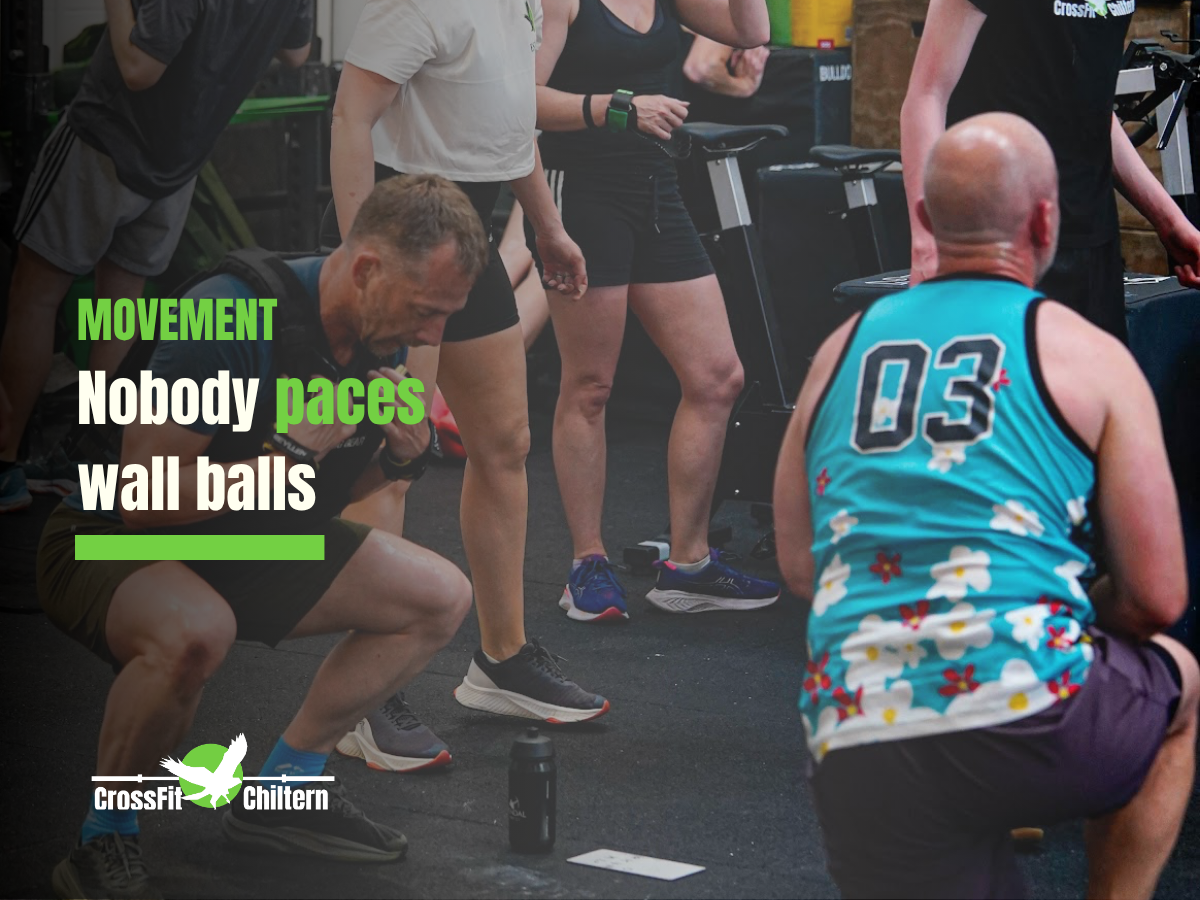
A 9kg ball, a target ten feet up the wall, and a movement you can teach in ninety seconds. Squat down, stand up, throw. Catch it and go again. Nothing technical about it.
Then thirty of them arrive in a workout and half the room falls apart at rep fourteen.
The wall ball is expensive for three reasons at once. You're squatting to full depth, which recruits a large amount of muscle. You're extending hard to throw, which is a power output well above a bodyweight squat. And your arms finish above your head on every single rep, which drives heart rate up faster than almost anything else you do. It's also a forced intensity movement. The target depth on the squat and target height on the throw mean you can't do lazy reps. This is a movement that forces you to put in constant work.
How to handle your wall balls!
Break the set before you're forced to. Treat thirty wall balls as ten, ten and ten, with five seconds standing over the ball in between (count the rest). Those fifteen seconds of planned rest cost less than the forty-second stall you'd otherwise take at rep twenty-one. Bigger sets on paper, slower time on the clock.
The standard is a 9kg ball to a 10ft target for men and 6kg to 9ft for women, and there is nothing sacred about either. The scaling ladder runs: a 6kg, 4kg or 3kg ball, a lower target, a squat to a box, or fewer reps per round. Any of those keeps the workout doing what it was written to do.
Three cues that make each rep cheaper. Keep your elbows underneath the ball rather than out to the sides, so your legs do the throwing and your shoulders are only guiding it — "extend, then throw". Catch the ball high and let it travel down with you into the squat rather than absorbing it with straight arms. And breathe at the top, at the moment the ball leaves your hands — people hold their breath through the throw and then can't recover.
Your version might be a 6kg ball, a lower target, or a squat to a box. All of them train the same thing. Nobody gets fitter from a load that turns a 12-minute workout into 20 minutes of standing still.
If you'd rather be coached through it than work it out from a blog, that's what we're for. Free, no-obligation 15-minute chat with Jeremy or Beth at crossfitchiltern.com.