The Front Rack: Why Your Elbows Drop
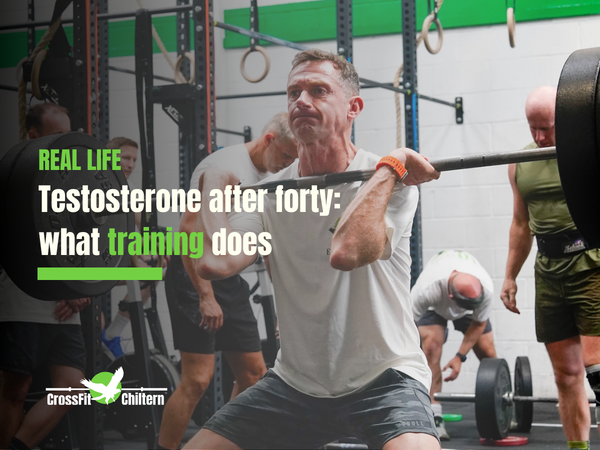
Front squat, halfway through the set. The elbows come down, the bar rolls forward onto your fingers, and the next thing you know you're squatting like a pooping dog. Everybody has had this. It's usually blamed on wrist mobility, and that's often not the full picture.
Front squat, halfway through the set. The elbows come down, the bar rolls forward onto your fingers, and the next thing you know you're squatting like a pooping dog. Everybody has had this. It's usually blamed on wrist mobility, and that's often not the full picture.
Remember the aim is for the bar to sit on your shoulders. Not in your hands.
Your fingers are there to stop the bar rolling forward — two or three of them under the bar is plenty, and that's preferred to a full grip, as a full grip sacrifices elbow position. Also, widen your hands on the bar. Outside shoulder width gives your wrists an angle they can tolerate and gives your elbows somewhere to go.
Then the actual cause. Holding your elbows high requires shoulder flexion and, more importantly, an extended thoracic spine. Under load, the mid-back is the first thing to round — and the instant it rounds, the elbows have to drop, because the shoulder can't stay in that position with a flexed spine underneath it. The elbow drop is a symptom. The rounding upper back is the fault.
Which is why people who stretch their wrists for a month don't improve.
Three things, ten minutes, twice a week:
Hang from a pull-up bar, :30, three times. Decompresses and opens the lats, which are usually the tight structure limiting overhead and front rack positions alike.
Lat stretch on the rack. Hands on the bar at hip height, step back, sink your chest towards the floor, :30 each side.
Front rack holds. Empty barbell, or a weight plate if the bar is too much, elbows as high as you can hold them, :20, three sets. Cue: "elbows to the wall, ribs down".
One wrist cue while you're at it: keep the wrist straight and let the bar sit behind the knuckles, not in the palm. A bent-back wrist under load is painful, and it's usually a symptom of gripping the bar rather than resting it on the shoulders.
If your shoulders won't allow it at all, use the cross-arm grip — arms crossed over the chest, bar resting on the shoulders, hands on top of the bar. It's a perfectly good front squat and it lets you train the position while the mobility work does its job over the next couple of months. Nobody needs to wait for perfect shoulders before loading a front squat.
Then take one working set of front squats and film it from the side. Watch the mid-back, not the elbows. You'll see the fault more clearly.
Every one of these is easily diagnosed by the coach standing next to you. Free, no-obligation 15-minute chat with Jeremy or Beth at crossfitchiltern.com.