Testosterone After Forty: What Training Does and Doesn't Do
The ads have found you by now — Numan, Manual, a finger-prick test through the door, a mate who says he feels twenty-five again. Meanwhile you're tired at 3pm and the middle is softer than it was.
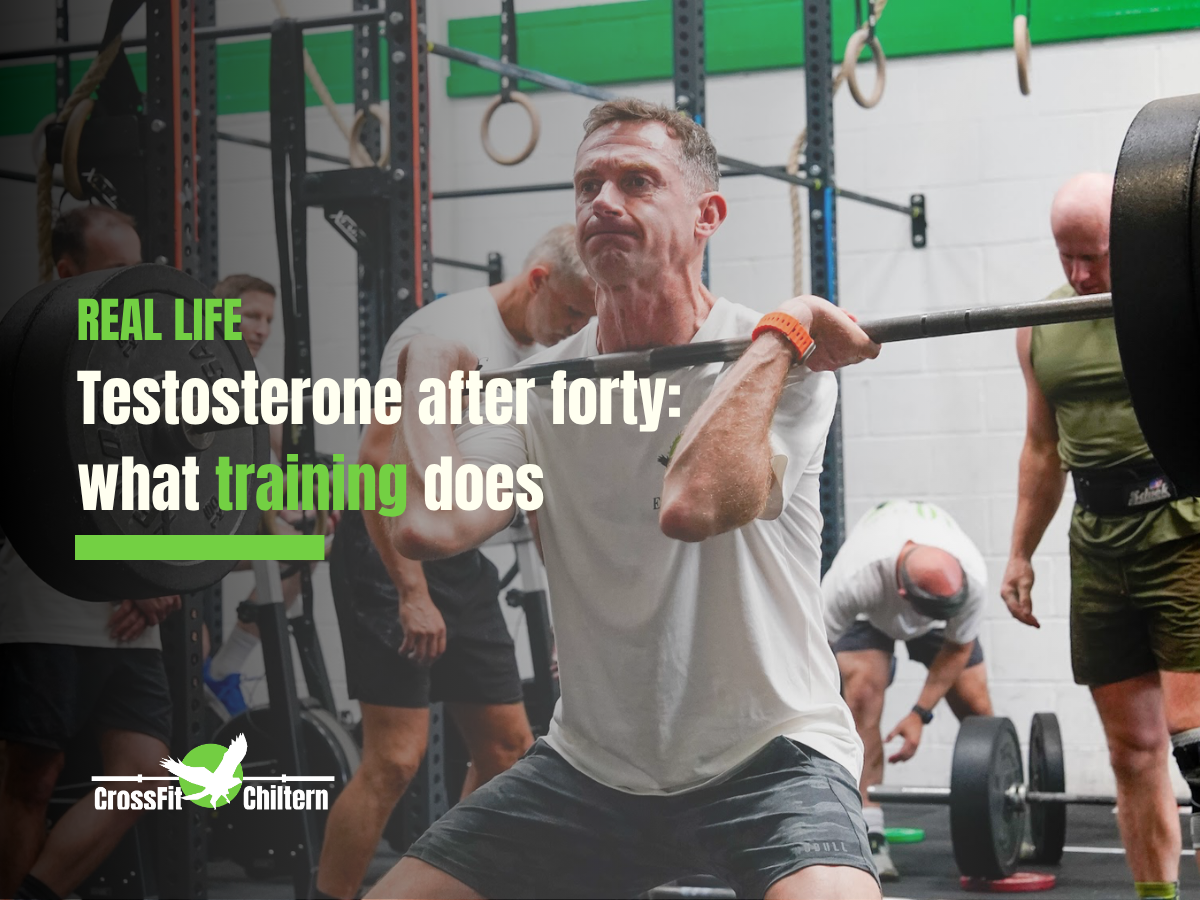
The ads have found you by now — Numan, Manual, a finger-prick test through the door, a mate who says he feels twenty-five again. Meanwhile you're tired at 3pm and the middle is softer than it was.
Some of that is testosterone. Rather less of it than the advertising suggests.
Testosterone in men falls gradually from around thirty, at roughly 1% a year in the absence of other problems. Over a decade that's a slope, not a cliff, and it's slow enough that a man of fifty is usually still comfortably inside the normal range. The symptoms people attribute to it — flat energy, poor mood, weight around the middle, low drive — are also, and more commonly, the symptoms of six hours' sleep, midweek drinking, carrying more fat than you used to, and doing nothing that demands anything of your muscles.
Those four are all things you can act on, and three of them will move the T-number as well.
Resistance training raises testosterone acutely, in the hour or two after a hard session. That spike is small and probably not where the benefit lies. The durable effect is indirect and much bigger: more muscle and less fat improve insulin sensitivity, better sleep raises overnight production, and less alcohol removes something that suppresses it directly. The training changes the conditions that produced the number.
So the practical version is unglamorous and it's the same list as always. Lift two or three times a week, hard enough that the last two reps are difficult. Get protein to 1.6–2.2 grams per kilo of bodyweight. Sleep seven to seven and a half hours, which means an evening decision, not a morning one. And look squarely at the midweek drinking, which is the one nobody wants on the list.
Give that six months before you conclude anything about hormones.
Two things to be careful of in the meantime. The private clinics advertising to you are selling a treatment, and a testosterone reading taken in the afternoon after a bad night will support selling it. If you're getting tested, it should be a morning sample and it should be repeated. And once you start exogenous (external) testosterone, your own production shuts down — this isn't something you trial for six months and then stop lightly. This is a life-changing decision.
If symptoms persist — and particularly if they include things beyond fatigue — that's a conversation with your GP, not a conversation with a coach and not an online clinic. I'm not qualified to interpret that result and neither is the internet.
Six months of lifting, sleeping and eating well costs less than a year of injections. Free, no-obligation 15-minute chat with Jeremy or Beth at crossfitchiltern.com.