First Week of Term: The Session That Isn't About Winning
Next week the timetable arrives. Football Monday, swimming Thursday, a match on Saturday that involves being somewhere cold at half past eight. And somewhere in that grid is at least one child who's going to spend the season being told, in a hundred small ways, that they're not one of the good ones.
I've coached children and teenagers for thirty years across sport, most of it in golf before this. What determines whether a child becomes an adult who moves comes down to whether physical activity became something they associate with being competent, or something they associate with being judged. That gets decided around now.
Competitive sport is brilliant for the child who's winning. For the child on the bench it's a weekly reminder, in public, with their parents watching, that they aren't. And children draw the obvious conclusion: I'm not sporty. That's not for me. Once that sentence is installed it tends to stay installed for thirty years, and then it turns up in my inbox as a forty-eight-year-old asking whether it's too late.
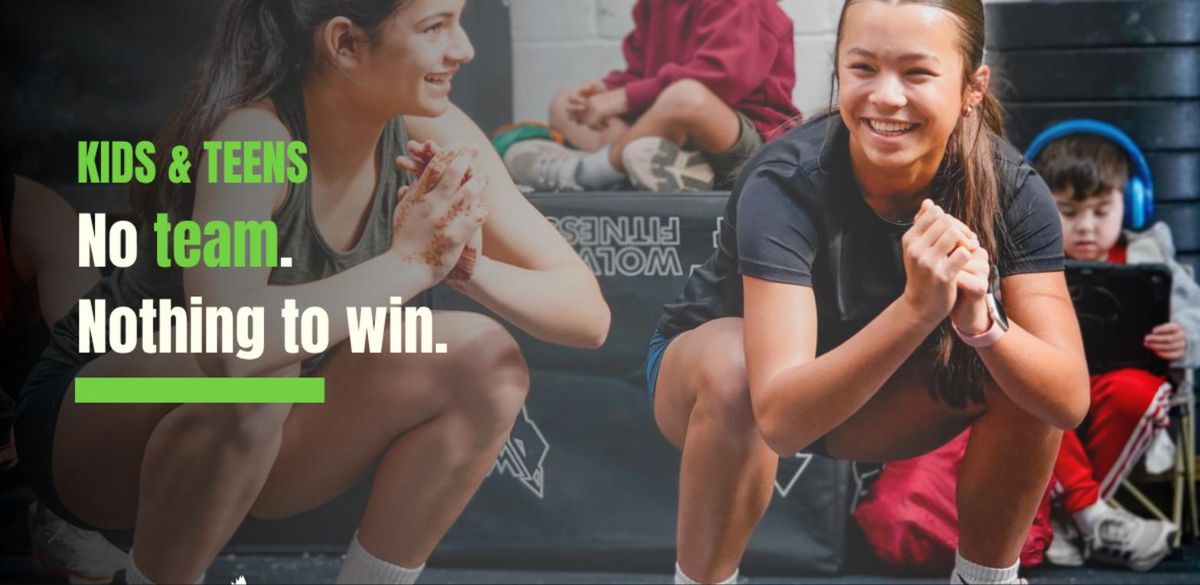
Our Kids and Teens sessions have no team, no selection and nothing to win. What they have is a standard, and progress a child can see. They learn to squat properly. To hinge. To press something overhead. To land from a jump without their knees collapsing. To hold a hollow position, climb a rope, lift a barbell they couldn't a month ago. It's coached, progressive, and measured against what they did last month.
Parents notice the effects in this order: they sleep better, they're less wound up, and around the eight-week mark they stand differently. That last one is what happens when a child has evidence their body is capable, and nobody gave it to them.
It also makes them better at the sport they play on Saturday. A child who can produce force from the floor and land properly is a faster, more robust, less injury-prone footballer or netballer or swimmer. Athletic development doesn't compete with their sport. It sits underneath it.
On safety: properly coached resistance training is one of the safest activities in youth sport, and safer than most of what we drive them to on a Saturday morning. The idea that it stunts growth was discredited decades ago and survives because well-meaning so-called experts keep repeating it. What matters is coaching, progression and load — exactly what a fifteen-year-old alone in a commercial gym with a phone does not have.
Ages 5 to 17, in age-appropriate groups. First week of term is the right week to try it, before the timetable hardens.
Book a free trial class for your child at crossfitchiltern.com — and see what properly coached movement looks like.