Cooking for a Household That's Back at School
The shop is sorted. Now the harder part: cooking, on a Tuesday, for people who all want different things, in the forty minutes between the end of work and the start of swimming.
Most family nutrition advice is written by someone who's never had to do this. So, practically:
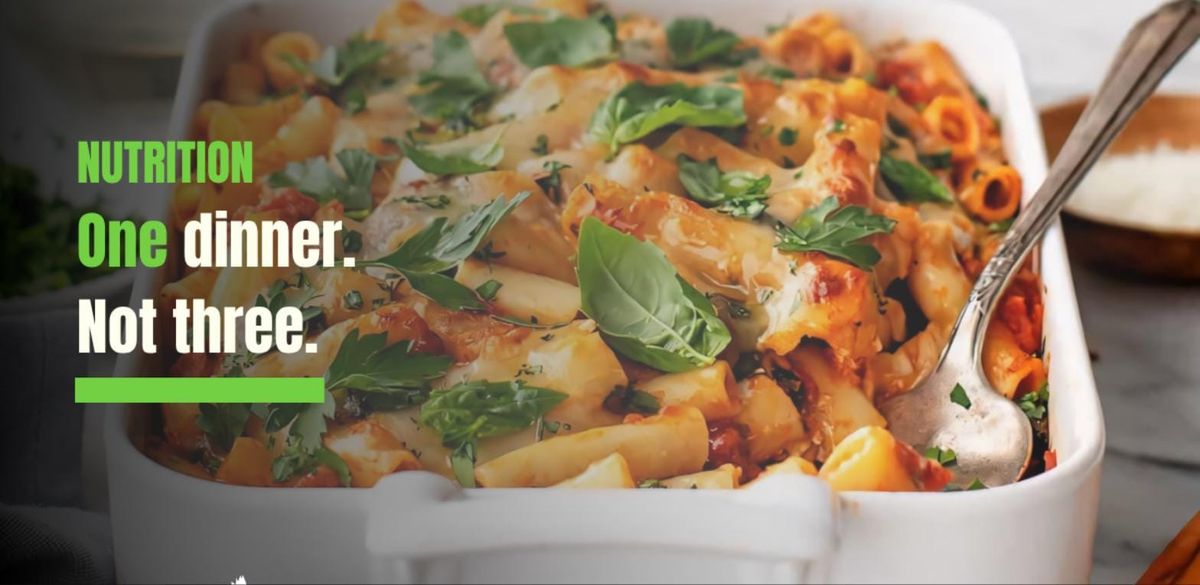
Cook one meal. Not three. The biggest drain on a family kitchen is the short-order-chef problem: one thing for the adults, one for the child who won't eat sauce, something beige for the one who won't eat vegetables. It doubles the work and guarantees the adults' meal is the one that gets compromised, because you've run out of energy by the time you get to it.
Cook one thing and vary it by deconstruction, not by cooking twice. Chilli, rice, and a bowl of grated cheese and chopped peppers on the table — everyone builds their own. Fajitas. A tray of chicken thighs with potatoes and a bowl of salad. Same components, their assembly. It removes the negotiation without removing the food.
Cook once, eat twice or even thrice. Whenever the oven's on, fill it. Double the mince. Roast two trays of vegetables. Cook six chicken thighs when you need three. Tomorrow's lunch — yours, not just theirs — is now made, and it's the meal most likely to become a forecourt sandwich if it isn't.
Have three twenty-minute meals you can cook without thinking. Not twenty recipes. Three. Eggs and vegetables. A stir-fry with whatever protein's in the fridge. Pasta with mince, a jar of decent sauce, and half a bag of spinach thrown in at the end. These are your Tuesdays, and they exist so the takeaway app never gets opened.
Protein first, always. Build every plate around the protein and the rest arranges itself. Half the plate vegetables, a palm of protein, a cupped handful of carbohydrate, a thumb of fat. If the adults' plates look like that most nights, so do the children's.
On the children: don't make food a battleground or a performance. Put the vegetables on the table. Eat them yourself. Say nothing. Repeated, low-pressure exposure works; negotiation doesn't. They watch what you eat far more closely than they listen to what you say about it.
And the packed lunch: put protein in it. A sandwich alone is a blood-sugar rollercoaster with a crash. Add a yoghurt, some cheese, a boiled egg, some ham.
The habits your children build now, watching a parent who cooks and eats vegetables and trains twice a week, are the habits they carry into their forties.
Three twenty-minute meals. One dinner, not three. Double whatever you're cooking. That's it.
Our Nutrition and Lifestyle Programme, with Dr Amy George, GP, covers food, habits and the long game in a supported, no-pressure way. Book a free, no-obligation 15-minute chat with Jeremy or Beth at crossfitchiltern.com.