Why the Class Beats Training on Your Own
Plenty of people have trained alone for twenty years and done perfectly well out of it. If you've got a programme, you follow it, and you know how to load a squat, solo training works.
Plenty of people have trained alone for twenty years and done perfectly well out of it. If you've got a programme, you follow it, and you know how to load a squat, solo training works.
Three things a class supplies that an empty gym can't, though, and they compound.
Commit to a fixed hour. Booking a class at 5:30 on Tuesday is a different act from intending to train on Tuesday. One survives a difficult Monday and the other doesn't. Nearly all the difference between people who train for years and people who train for six weeks lives here, and none of it is about physiology.
Let somebody else choose the load. Left alone, we do what we're good at and we pick weights we know we can handle. A coach who watched you last week will put 5kg more on the bar than you would have, and will take 10kg off on the day you slept badly. Neither of those decisions is one you can reliably make about yourself.
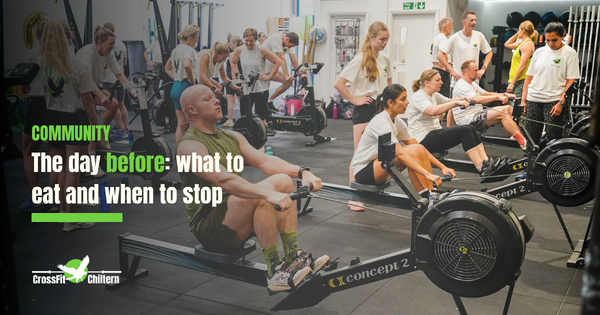
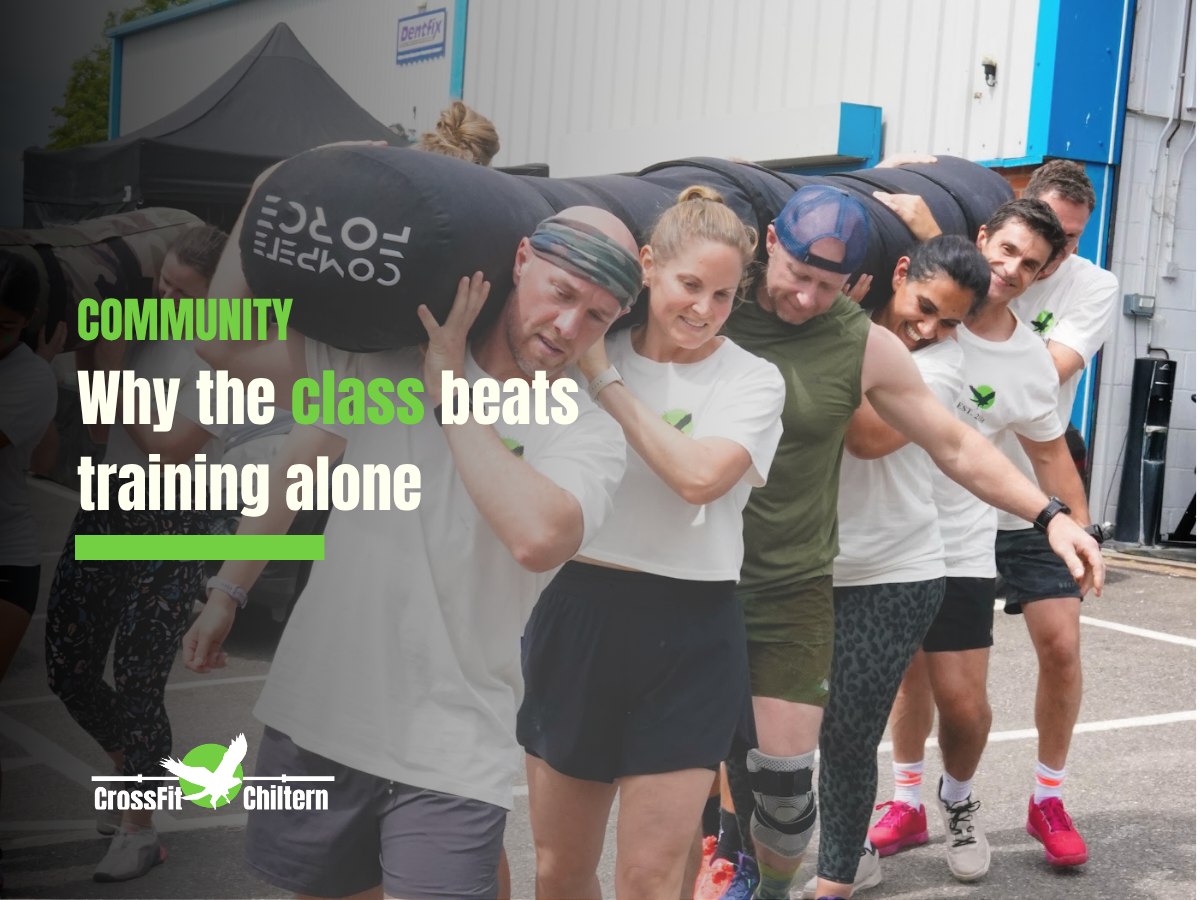
Work alongside other people. Effort in company is higher than effort alone. Not dramatically, and not by shouting — you simply don't stop at rep eight when the person next to you is on rep ten. Over a year that difference is substantial.
There's a fourth, and it's the one that keeps people here for years. You know fourteen people, they know you, and somebody notices when you're not there. For a lot of adults that's the only regular contact they have with people who aren't colleagues or family. If they work from home it might be their only outside contact for days!
The cost of it is the timetable. A class runs when it runs, and there are nine of them on a weekday — 5:30, 6:30, 7:30, 9:30, 11, 12:15 on Mondays, Tuesdays and Fridays, then 6 and 7 in the evening. If none of those nine work for you, none of this applies. Solo training fits anywhere, and for some jobs that's decisive.
If the times don't work, look at PT — we can work completely around your schedule. If that's out of budget, get a programme written for you and a coach who checks in on it, and train it alone. It costs less than classes and keeps the correction and the progression.
If you train alone and it's working, keep going. But try one coached session a week alongside it for a month. Most of the people who do that stop training alone inside six weeks. That's just what happens — the hour is better and it costs you nothing to find out.
Chat with us before committing to anything. Book a free, no-obligation 15-minute chat with Jeremy or Beth at crossfitchiltern.com.