The Check-In: Why Tracking Your Training Reveals More Than You Think
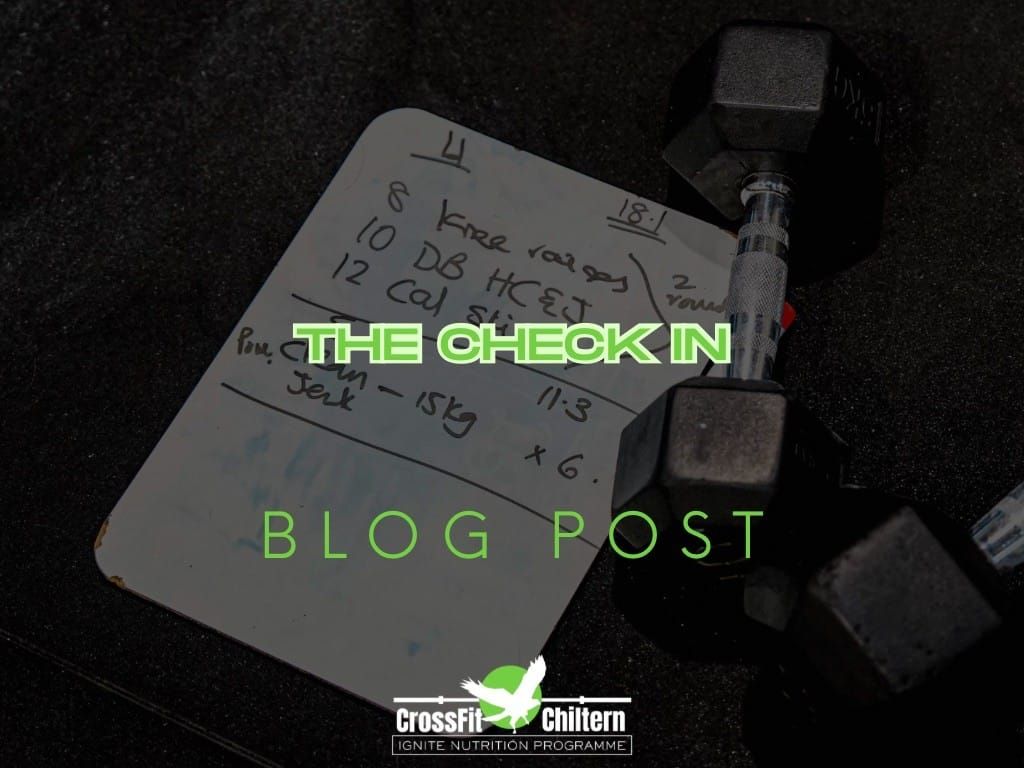
There is a difference between training and training with awareness. Most people who exercise regularly have a sense of what they have done — the number of sessions in a week, the general effort level, whether things felt good or flat. What most people do not have is a record — something that shows them the pattern over weeks and months, not the impression. And the pattern is almost always more revealing than the impression.
Training logs have been a feature of serious athletic preparation since long before the digital tools that make them accessible to everyone now existed. The principle is straightforward: what gets measured gets managed, and the act of recording creates a feedback loop between intention and outcome that improves decision-making over time. For a recreational CrossFit athlete training three to five times a week, the data that accumulates across a year is genuinely informative — not in the way that a scientific study is informative, but in the specific, personal way that shows you your own patterns clearly enough to act on them.
The most immediately useful data point is not the one most people track. Most athletes who log their training focus on performance — the weight lifted, the time achieved, the rounds completed. These are important. But the more predictive variables are the ones that precede performance: sleep quality the night before, stress load during the week, nutrition in the preceding twenty-four hours, and how the warm-up felt relative to normal. These are the leading indicators. The performance score is the lagging indicator. If you only track the lagging indicator, you are looking at the outcome without the inputs that determined it.
HRV is the most sophisticated version of this principle. Heart rate variability — the variation in time between consecutive heartbeats — is a direct measure of autonomic nervous system health and recovery readiness. A high HRV indicates a system that is recovered and ready for demand. A low HRV indicates a system that is still under stress. Tracked daily, HRV creates a longitudinal picture of recovery that is far more nuanced than subjective tiredness — because, as discussed earlier this month, the body adapts to feeling tired and perception becomes unreliable under chronic stress load.
For athletes who prefer a simpler approach, a subjective log works well when applied honestly. A one to five rating of sleep quality, energy, and mood at the start of each session, recorded alongside the session content and outcome, creates a dataset that reveals patterns clearly after four to six weeks. Most athletes who do this discover things they did not expect: that their performance consistently drops on sessions following poor sleep, even when they felt fine at the start. That their best performances cluster around periods of consistent nutrition. That there is a predictable dip in energy and motivation at a specific point in the week or month.
At CrossFit Chiltern, WODboard is the tracking tool we use and recommend. It logs sessions, tracks personal records, and provides the coaches with visibility of what athletes have done and when — which makes the coaching conversation more specific and more useful. The athlete who can say "my five-rep deadlift has increased by fifteen kilograms in four months and my back feels better than it did" has a relationship with their training that produces different outcomes to the athlete who is going roughly as hard as they feel like on a given day.
Track it. Then look at what it tells you.