Staying in the Game While You Heal
Andrew asked how you stay motivated when you're injured or ill. Start here: almost nothing stops you training. It changes what you train.
We see it in our coaches. Ali has trained through back and shoulder injuries. Lauren through a back injury. I came back after a double hernia repair. In every case the training changed — sometimes drastically. None of us stopped. We worked the parts that worked. A broken wrist doesn't stop you squatting. A dodgy shoulder doesn't stop you cycling or deadlifting or doing a mountain of leg and core work you'd otherwise never get to. I've watched people come out of an injury with a stronger set of legs than they went in with, because for eight weeks legs were all they had.
What goes wrong when people get injured isn't the injury. They stop coming in. The training was never the only thing they were getting from the place — there's the routine, the 5:30am, the people, the coach who notices a rough week. Injury takes the training away, and then they take everything else away themselves. Six weeks later there's no injury and no habit either, and getting back in feels like starting from scratch.
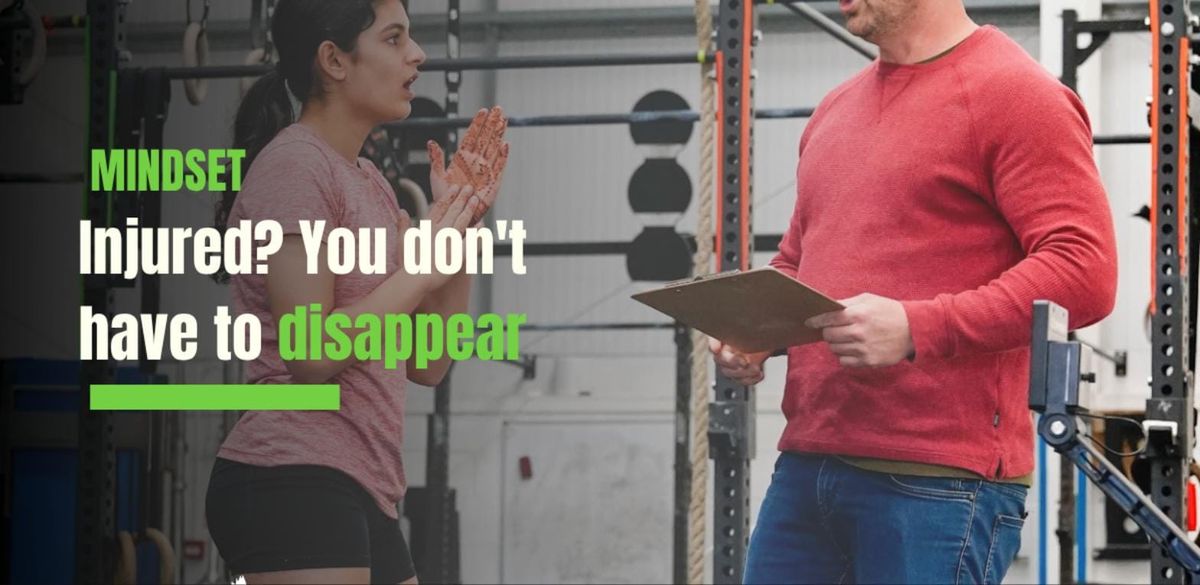
So come in anyway. Come to your class. Do the version of the session that works around whatever's healing — that's what myself and the coaches are for, and it's a problem I enjoy solving. If you're genuinely too ill to train, come in and have a chat. Stay in the routine.
The caveat is absolute. Working around an injury is not training through pain. Anything acute, anything new, anything post-surgical gets cleared properly first — and for pain, see a physio before you see me. If you're unwell with a fever, don't train and don't be a hero. What I'm arguing against is the default assumption that an injury means six weeks of nothing.
There's a bigger point underneath this, and Greg Glassman made it more bluntly than I would. His argument was that unless we ""ratchet up our tolerance for sprains, strains, ACL tears"" and the like, we'll never seriously address chronic disease. That trade-off deserves stating honestly. Training hard carries a real risk of a strained back or a tweaked shoulder. Not training carries a risk of diabetes, heart disease, frailty, and losing the ability to get off the floor unaided at eighty. Those aren't the same size of risk. They're not even close.
The injury is a setback. Disappearing from the gym is the real issue.
If the thought of walking into a gym makes you wince, this is exactly who we built the place for. Book a free, no-obligation 15-minute chat with Jeremy or Beth at crossfitchiltern.com — no hard sell, and most of us hadn't trained in years when we started. We'll build a plan around your life, not a generic template.