Sets, Reps and Patience: What Adds Muscle After Forty
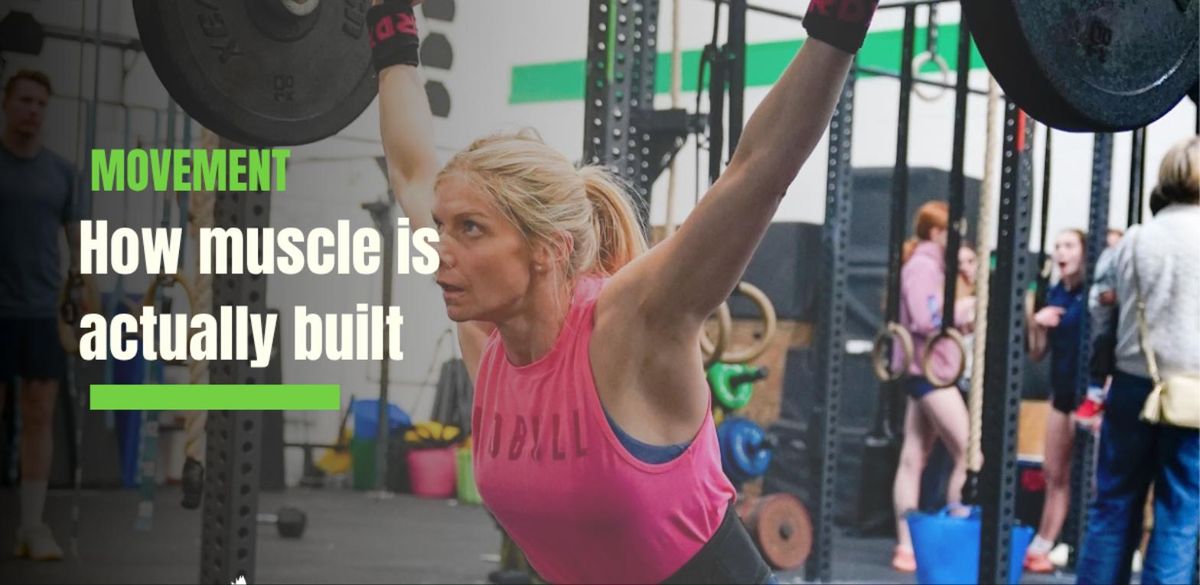
Jas asked me how muscle is actually built. There are four things. Everything else you've read is a variation on them, sold back to you with a name.
One: the set has to get hard. A set only counts when the last few reps are genuinely difficult — two or three reps away from failure. Everything before that is preparation. As a set gets hard, your body is forced to recruit the biggest, strongest muscle fibres — the ones it saves for emergencies, with the most growth potential. They only turn up when needed. Stop before the set gets hard and you're stopping before the magic happens!
Two: enough hard sets. The number is 10 to 20 hard sets per muscle group per week. Not total sets. Hard ones. Training legs 3 times a week will be plenty. One set of ten with a weight you could have done fifteen with is zero — however many sets you do, if they're easy they count for very little.
Three: enough protein. 1.6 to 2.2 grams per kilo of bodyweight a day. An 80kg adult needs 130 to 175 grams. Train hard on 70 grams a day and you're asking the body to build something without the material. It won't.
Four: enough time. A trained adult in their forties or fifties, doing everything right, might add half a kilo of muscle in a good month. Probably less. Over a year that's a few kilos, and a few kilos of muscle each year will result in significantly different strength, different capacity to get off the floor at seventy. If you're measuring in six weeks you'll quit before it works. You need to stick with it long term.
Remember these "sets" don't need to be in a 5 x 5 strength component. I think a lot of people forget that when I'm programming workouts and Metcons (the engine piece) I'll be assigning weights and loads that are in there to build muscle. For example recently I programmed a 7 minute AMRAP of 7 Lunges and 7 Box Jumps. The goal when writing is for people to accumulate 40-60 reps of lunges (6-9 sets of 7). This isn't random. This is part of the volume we put in for strength and hypertrophy. But if you're constantly babying the weights because "you want to get a sweat on!" you are literally wasting my programming and your time.
This week: commit to ensuring the weights you choose for your workout are appropriate to challenge you. Maintain safe positions but push for a weight that's different to your "regular" number.
The caveat matters more after forty. Hard is not the same as sloppy. A set ends when your positions start to break down, not when you physically can't move the bar. There's a version of training to failure that just means training to injury. If you're not sure where that line is, that's what a coach is for.
Load it, do enough of it, feed it, and wait longer than you want to.
If the thought of walking into a gym makes you wince, this is exactly who we built the place for. Book a free, no-obligation 15-minute chat with Jeremy or Beth at crossfitchiltern.com — no hard sell, and most of us hadn't trained in years when we started. We'll build a plan around your life, not a generic template.