Grips, Belts and Wrist Straps: When to Start, and Why
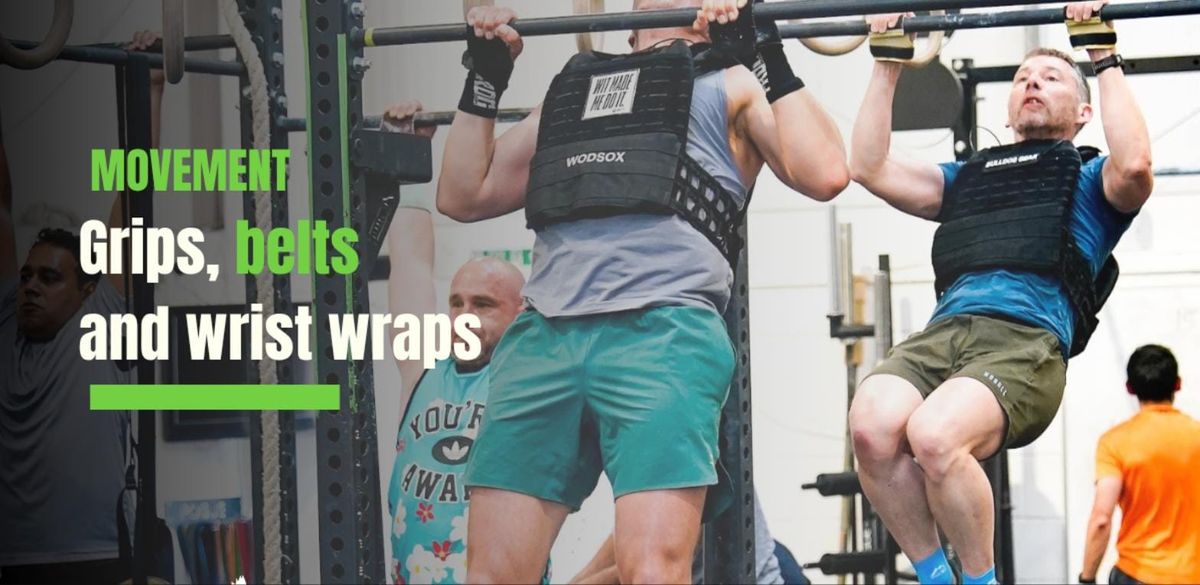
Mira asked about the kit — grips, belts, tape, when to start using them and how much of it is theatre. Some of it is theatre. Most of it isn't. Here it is in the order you'll need it.
Grips. When you're doing volume on the bar — not before. Grips protect your hands on high-rep pull-ups, toes-to-bar and muscle-ups. Doing sets of five ring rows, you don't need them and they'll get in the way. Thirty pull-ups in a workout, they earn their place. What they don't do is make you stronger, and they're not a substitute for grip strength.
Tape. Not for the pull-up bar — that's what grips are for. Tape is for thumbs and fingers on the barbell, particularly once you start hook grip on the Olympic lifts, which is early. Cheap, and worth having in the bag.
A belt. Later than you think, and for less than you think. Most people think a belt is a back brace. It's not. A belt gives you something to brace against. You take a big breath, press your abdominals out into it, and the pressure inside your torso stiffens your midsection — which lets you produce more force and keeps your spine in better positions under a heavy load. It doesn't hold your back together.
Which means two things. It only makes sense once you can brace properly without one — otherwise you're wearing a belt without knowing how to use it, and we need to be able to lift in the real world without one. And use it for heavy work only: top sets of squats and deadlifts, roughly 85 per cent and up. Wearing one through a metcon is pointless. Wearing one for a set of ten at 60 per cent is worse — it stops you developing the thing the belt is there to support. I love having the belt in reserve for the heavy sets. It feels like it gives me an extra boost. Some is real support for my brace breath and some is psychological, but I don't care. It allows me to lift more!
The rule: learn to brace for six months, then buy a belt, then use it on top sets only.
Wrist wraps. Useful for many people in the front rack and overhead positions. A bit of comfort and support if you struggle. But much like the belt, save it for when the weight gets uncomfortable.
The ones you can skip: knee sleeves keep the joint warm and not much else. I have a pair purely for high-rep burpee or lunge workouts to stop myself grazing my knees. Weightlifting shoes are a real advantage once you're squatting and snatching regularly — but that's a year-two purchase.
If you're unsure, ask a coach. They can help determine if the equipment will help or if your form improving will negate the need.
If the thought of walking into a gym makes you wince, this is exactly who we built the place for. Book a free, no-obligation 15-minute chat with Jeremy or Beth at crossfitchiltern.com — no hard sell, and most of us hadn't trained in years when we started. We'll build a plan around your life, not a generic template.